
HYROX training in Sydney's Inner West: what a coached week looks like
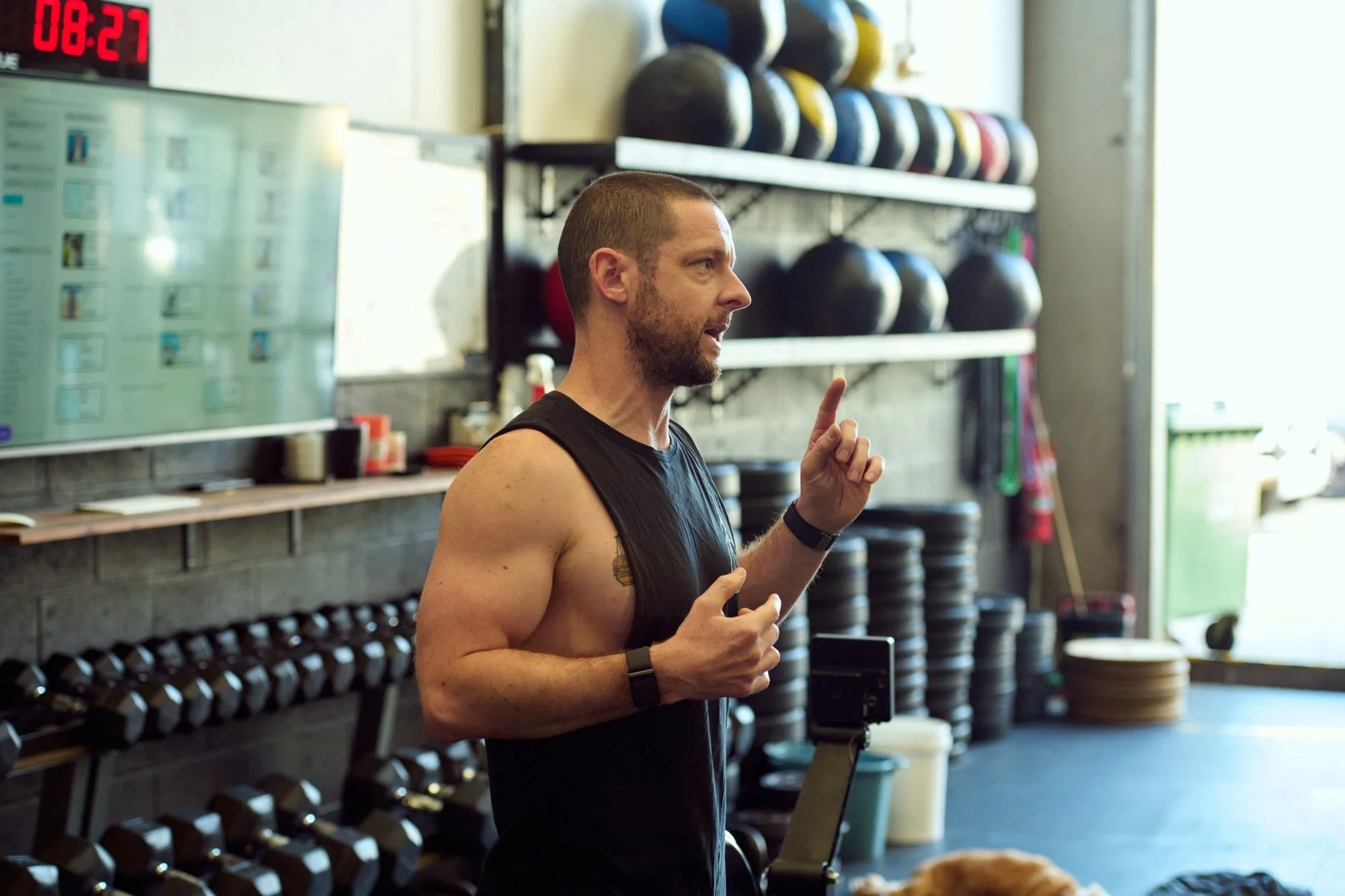
By Quinton, owner and coach at Accelerate Strength, Rozelle. Last updated 19 November 2026.
If you've watched a HYROX race, you know the look: people running hard, then dragging a sled, then running again on legs that don't quite feel like theirs. It's a simple format and a brutally honest one. Plenty of people around Balmain, Rozelle, Leichhardt and the wider Inner West are curious about a first race, and most get stuck on the same question: what should I actually train, and how often?
This guide covers what HYROX asks of your body, what a sensible training week looks like for a busy adult, and what to look for in a gym before you commit. I've spent more than 15 years in strength and conditioning, and the same few things come up every time. If you'd rather start with the structured version, our HYROX training page has the free 10-week plan.
What HYROX actually is
A HYROX race is eight 1 km runs, each followed by a workout station. The stations come in the same order every time:
- 1,000 m SkiErg
- 50 m sled push
- 50 m sled pull
- 80 m burpee broad jumps
- 1,000 m row
- 200 m farmers carry
- 100 m sandbag lunges
- Wall balls (100 reps in most divisions)
Weights and divisions differ (singles, doubles, relay, open and pro), so check the official HYROX site for the current standards in your division before you plan around them. Because the course is the same everywhere, you can train for it specifically. That's the good news.

What your training has to cover
Three things matter most.
1. An aerobic base. Eight kilometres of running is the biggest single chunk of the day. If your running is shaky, that's where the time disappears.
2. Strength you can repeat. Sleds, carries, lunges and wall balls aren't one-rep-max efforts. They're moderate loads you have to keep moving while you're tired. Think strength-endurance, not how much you can lift once.
3. Running on tired legs. This is the part most people under-train. Running straight after a sled push feels nothing like a fresh run. Practise it: short runs between stations, not only stations on their own and runs on their own.
The most common mistakes are all running and no strength work, all gym work and hardly any running, and going flat out in every single session, which leaves you flat by week four.
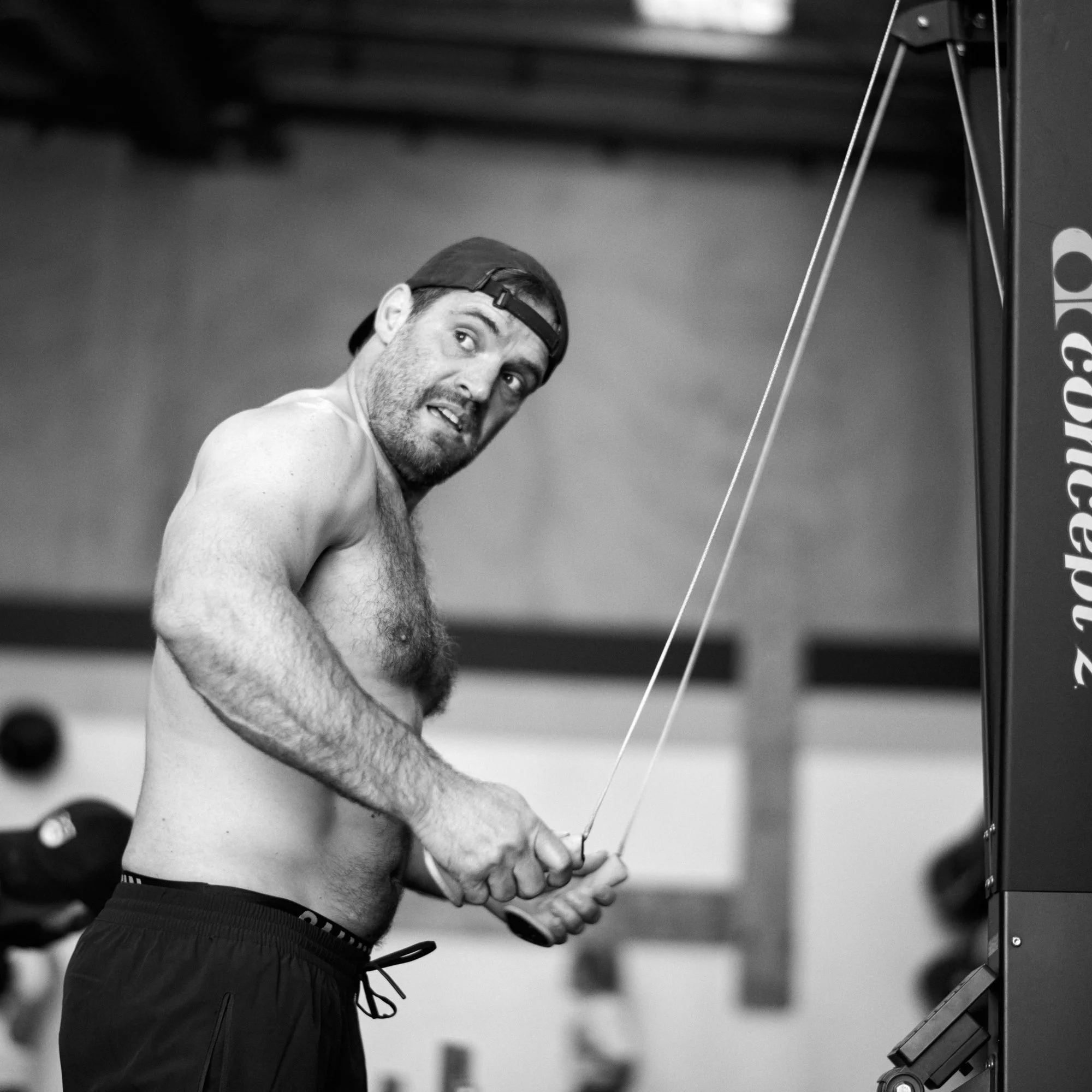
A realistic training week
You don't need to train every day. For most working adults, a good week has four parts:
- Two coached sessions built around the stations and conditioning
- One or two runs, one easy and one with some pace
- One plain strength session that isn't about HYROX at all, because lifting heavy-ish things keeps you robust
- Rest days that are actual rest days
Here's how that fits our class timetable at Accelerate Strength in Rozelle:
- Tuesday 5:30am: HYROX-specific conditioning
- Wednesday 6:00pm: Engine Room, HYROX-style conditioning to build your engine
- Saturday 7:00am or 9:00am: HYROX-style group conditioning
- Sunday 7:00am: Run Club, coached running, free and open to members and non-members
That's an example, not a prescription. If you're new, start with one or two sessions a week and build from there. If you've raced before, add running volume first.
Why coached group training suits HYROX
Three reasons come up again and again: technique, pacing, and kit.
- Technique. Sled pushes, wall balls and burpee broad jumps are easy to do badly and tiring to do badly. A coach watching you in week one saves a lot of wasted energy on race day.
- Pacing. The classic HYROX mistake is starting the first run too fast. Learning your pace with other people around you, and a coach calling it, is easier than guessing alone.
- Kit and company. The stations need equipment most people don't have at home, and it's a lot easier to turn up at 5:30am when someone is expecting you.
What to look for in a HYROX gym near you
Whether it's us or somewhere else in the Inner West, ask these five questions:
- Is running actually programmed, or only the stations?
- Do sessions practise the stations in race order and under fatigue?
- Will a coach scale the session to my level, and can I start if I've never raced?
- Is there a clear weekly structure, or are the workouts random?
- Can I try it before I commit?
If a gym can't answer those clearly, keep looking.
Common questions
Do I need to be a runner to start HYROX training?
No. You do need to build some running, because it's roughly half the race. Start with short, easy runs and let the coaching sessions handle the stations.
How long does it take to get ready for a first HYROX?
It depends on your starting point. Our free plan runs for 10 weeks. If you're starting from no regular running or training, give yourself longer and build gradually.
I've never done CrossFit or group fitness. Can I still join?
Yes. Sessions are scaled to your level, so a first-timer and an experienced athlete can train in the same class.
Is HYROX training only for people who want to race?
No. Plenty of people do it because it's a well-rounded way to build fitness, with or without a race date.
Try it for free
The easiest way to find out is to train with us. Start your 7-day free trial and come to a session, or download our free 10-week HYROX plan to start on your own. Our HYROX training guide breaks the plan down week by week, and our rowing set-up guide will help with the row station.
If you want more time after your free week, the 10-Day Experience is $29. You can see everything we offer on the Accelerate Strength homepage.
If you have an injury or a health condition, check with your doctor or physio before starting a new program. This guide is general education, not medical advice.