
How Deep Should You Squat? A Coach's Guide to Squat Depth
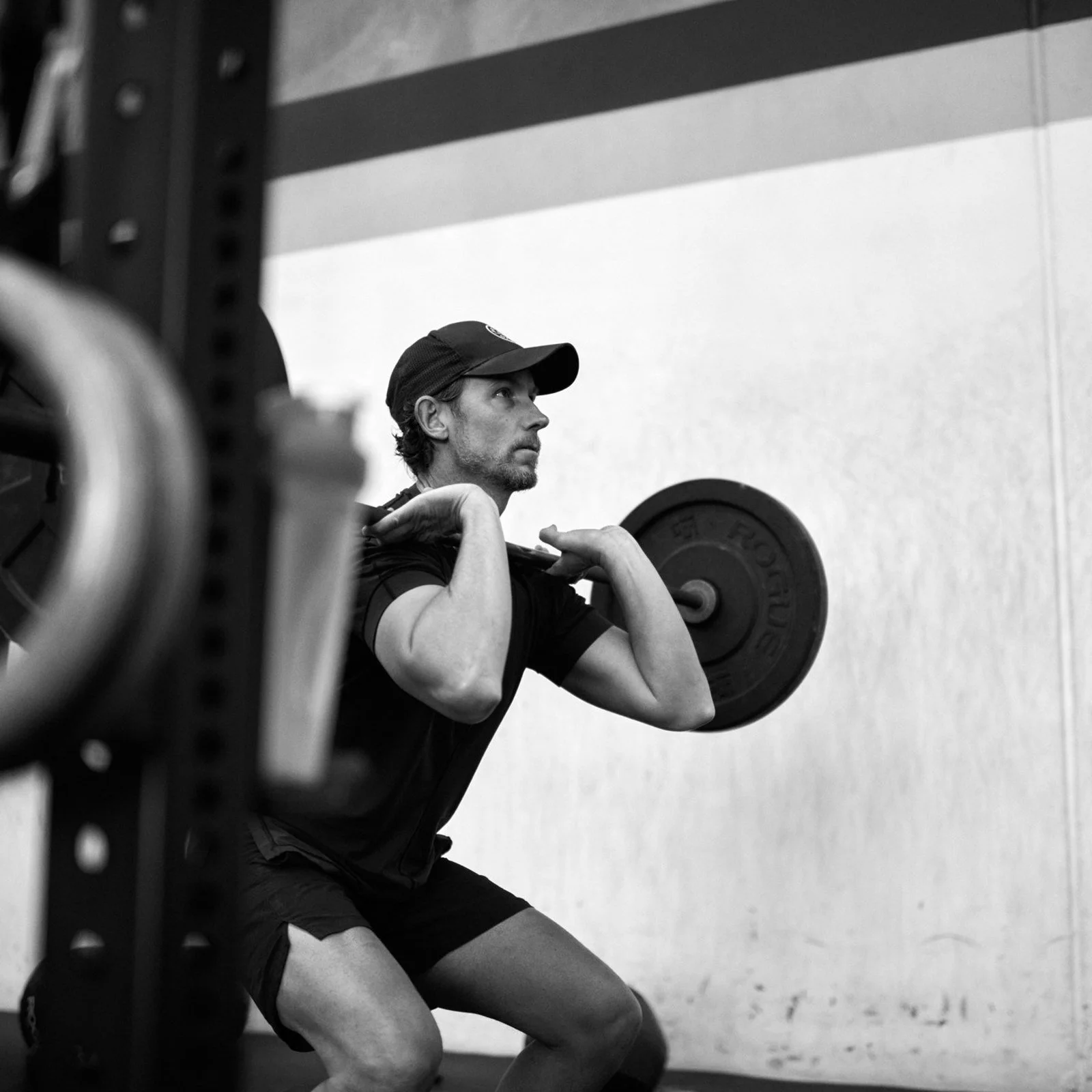
As deep as you can own.
That is the short answer, and it is the one we give every new lifter at Accelerate Strength in Rozelle. It sounds simple. The hard part is working out what "own" means: how deep your hips will actually let you go, and where your position starts to fall apart.
Free download: the 15-page Squat Depth Playbook (position checks, fault finder, 6-week block, niggle traffic light). Download the PDF
The short answer
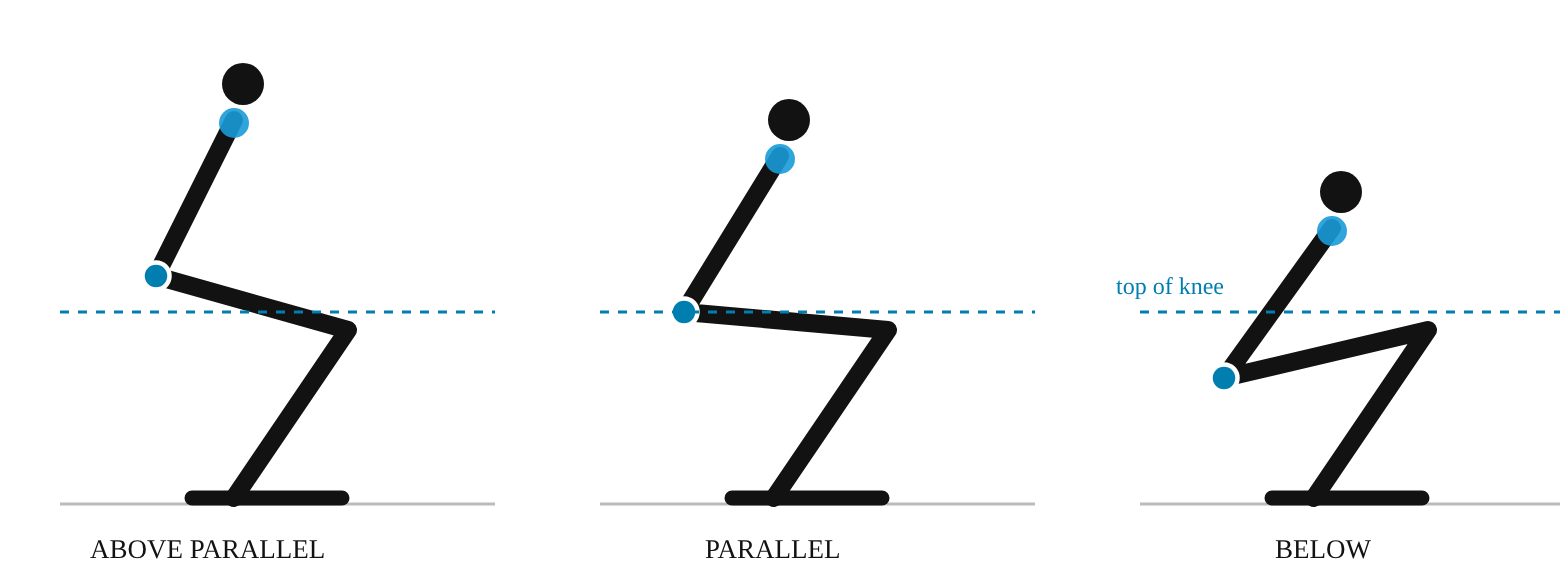
For most healthy people, a hip crease at or just below the top of the knee is a great target. That is the usual line for a "parallel" squat. Going deeper is a bonus, and it is worth chasing if your position stays clean. Going shallower is fine too, as long as you are honest about why: it is a choice, not a limit you have never tested.
Why some people can't squat all the way down
You can train strength, control and mobility. You cannot change the shape of your hips.
Socket depth, the angle of the neck of the femur and femur length all change how deep a squat can go before bone meets bone. That is why two lifters with the same coaching and the same effort can end up with squats that look very different. Some people can sit all the way down. Some never will, however much they stretch.
Once your hips run out of room, something else has to give. Usually the pelvis tucks under and the lower back rounds to find a bit more depth. That tuck, often called "butt wink", is the signal to stop and reset. Your clean depth is the lowest point you reach before it happens.
Three checks before you chase depth
Depth only counts if your position holds. These are the three things we coach before the weight goes on.
1. Whole foot, stable stance
Heels about shoulder width apart as a starting point, toes turned out roughly 15 to 30 degrees, and the whole foot loaded: heel, big toe and little toe. Keep the bar over the middle of the foot. If your heels lift, you have run out of ankle or knee room, so widen the stance, turn the toes out a bit more or try a small heel lift.
2. Brace, ribs down
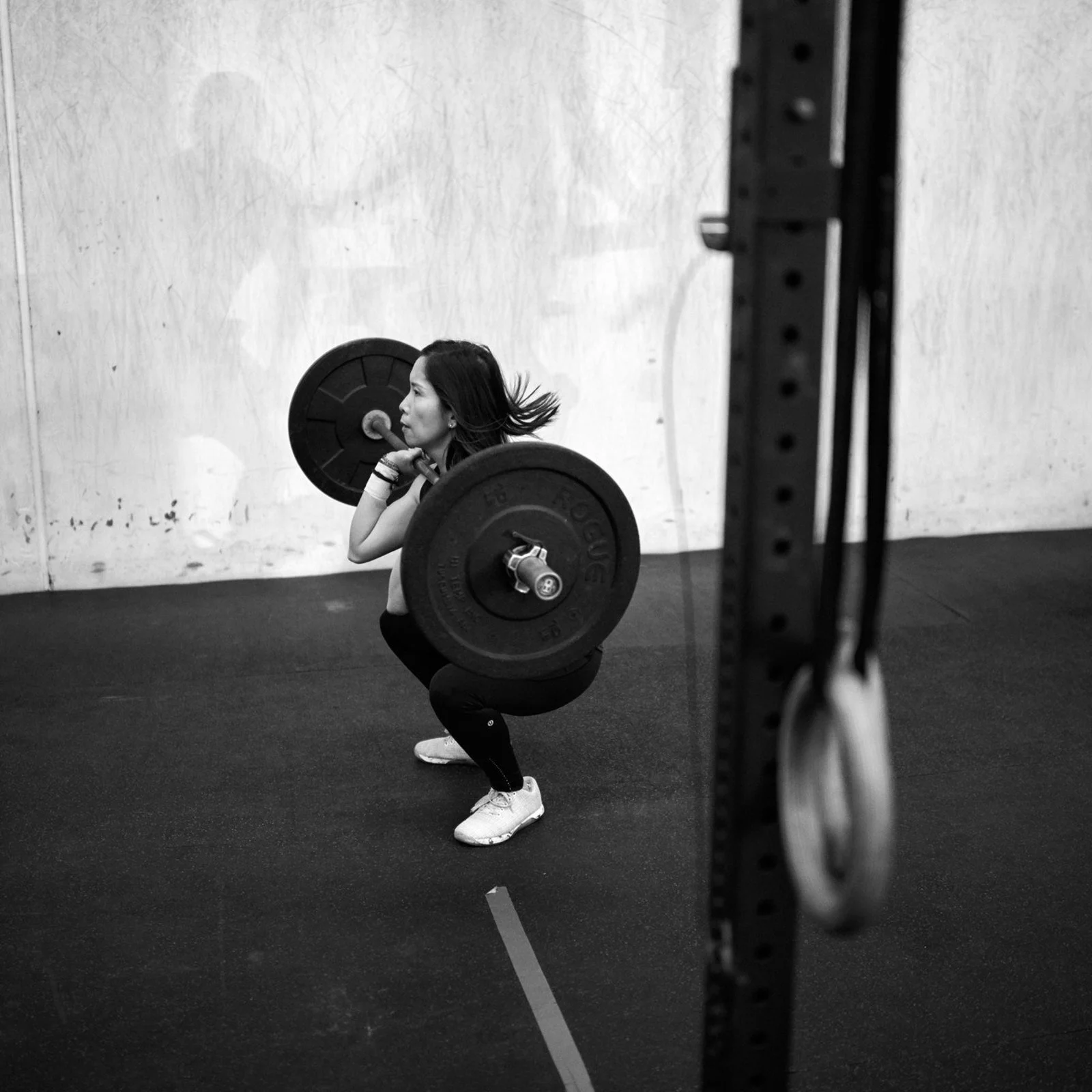
Take a breath low into the belly and sides, then push out against the trunk as if someone was about to poke you in the stomach. Stack your ribs over your pelvis so the front of the ribs is not flared up. You want a long, neutral spine, not a big arch.
This is also why we are careful with the "chest up at all costs" cue. As a gentle reminder to stay tall it is fine. As a rule, it often turns into leaning back and arching the lower back, which lifts the ribs and breaks the stack over the pelvis. A more horizontal torso is normal in a good squat, as long as the brace and neutral spine hold.
3. Knees and hips
Sit down between your hips so the hips and knees bend together. Knees should track in line with the toes. For most healthy people it is fine if the knees move past the toes. If that bothers a sore knee, sit back more. If the knees cave in, narrow the stance slightly, use a light band as a reminder to push out, and lighten the load until it stays clean.
Find your depth in two minutes
You do not need a lab.
- Film a light set from the side, phone at hip height, about three metres away.
- Squat slowly to the lowest point you can reach with your brace on, and pause for a second.
- Play it back and watch the pelvis. Where does the lower back start to round and the pelvis start to tuck?
- That height is your clean depth for heavy work. Set a box or safety pins just above it and train to it.
One caution: compare the first and last frames. If you start with a hard arch, what looks like a tuck at the bottom can just be the spine settling back toward neutral. A big arch softening to a small arch is fine. A slight arch rounding into a flexed lower back is the one to manage.
If the tuck disappears in a goblet squat, it is mostly a bracing and control issue, not a range issue. If it appears even with a counterweight and a supported deep squat, your hips are probably the limit today.
Is deeper actually better? What the research says
Three findings do most of the work, all in healthy, mostly young, trained adults:
- Deep squats were not shown to be riskier for healthy knees and backs. A 2013 review of the squat-depth literature (Hartmann et al.) found no evidence that deep squats are more dangerous than shallow ones when technique is sound and load increases sensibly.
- You get strong at the depth you train. In a 12-week study of 17 men (Bloomquist et al., 2013), shallow squatters gained about 36% strength in their shallow range but only about 9% in the deeper range, while the deep squatters improved by about 20% across both.
- Deeper squats built more glute and adductor muscle. In a 10-week study (Kubo et al., 2019), deep squats (about 140 degrees of knee bend) grew more glute and adductor muscle than half squats (about 90 degrees), with similar thigh growth.
What that means: if your hips and position allow it, squatting deeper is a good default. It does not mean everyone must go ass to grass. These are small studies in healthy lifters, so they are a guide, not a guarantee.
When depth hurts
Use the traffic light during the session and the next morning:
- Green (0 to 3 out of 10, settled by morning): hard, not harmful. Carry on.
- Amber (4 to 5 out of 10, or lingering): back off, don't stop. Drop the load 10 to 20%, squat to a box or pins, adjust stance, or swap to a goblet, front or split squat.
- Red (above 5, sharp, or worse each rep): stop and tell your coach. Get it assessed.
Pain after a fall, pins and needles or weakness down a leg, fever with back pain, or numbness around the groin are not training problems. See a GP or physio promptly, and go to emergency for new bladder or bowel control problems.
Frequently asked questions
Do I have to squat below parallel?
No. For most healthy people, a hip crease at or just below the top of the knee is a great target, and many people can go deeper. But depth is a bonus you earn with good position, not a requirement. If you compete in powerlifting you need to hit the standard. Otherwise, squat as deep as you can control.
Can everyone squat ass to grass?
No. Hip socket depth, the angle of the neck of the femur and femur length all affect how deep a squat can go before the hip runs out of room. Many people can sit all the way down. Some never will, however much they work at it.
Is it okay if my knees go past my toes?
For most healthy people, yes. Knees travelling past the toes slightly increases the work at the knee, but healthy tissue adapts well. If forward knee travel causes pain, sit back more or change your stance and talk to your coach or a physio.
Are deep squats bad for your knees or back?
A 2013 review of the squat-depth research found no evidence that deep squats are more dangerous than shallow squats for healthy people when technique is sound and load increases sensibly. Pain is different: if depth hurts, change the load, depth or variation and get it checked if it persists.
What is butt wink and should I fix it?
Butt wink is when the pelvis tucks under and the lower back rounds at the bottom of a squat. First check whether it is a real tuck or just a hard arch settling back to neutral. If it is a tuck, squat only to the depth before it happens, then build range and control over time with goblet and front squats or pin squats.
Want it coached?
We coach the squat every week at Accelerate Strength in Rozelle, and the three checks above (whole foot, brace, knees and hips) are where we start. Newer lifters usually begin with a goblet squat or an empty bar. Experienced lifters get filmed and programmed. Book a free class and we will watch your squat.
Download the Squat Depth Playbook (PDF)
This post is general education for healthy adults and not medical advice. If you have pain, an injury or a health condition, see a GP or physio before changing your training.
References
- Nuckols G. How to Squat: The Definitive Guide. Stronger By Science.
- Ulm RA. Stability and the squat: front-loaded versus back-loaded squatting, Part 4. NSCA Coach. 2017;4(4).
- Mash M. Squat Form Checklist. Barbell Rehab.
- Rippetoe M. The Squat, or How I Learned to Stop Leg-Pressing and Use My Ass. Starting Strength. 2009.
- Squatting: Overview and Key Points (squat modification guide).
- Hartmann H, Wirth K, Klusemann M. Analysis of the load on the knee joint and vertebral column with changes in squatting depth and weight load. Sports Medicine. 2013.
- Bloomquist K, Langberg H, Karlsen S, Madsgaard S, Boesen M, Raastad T. Effect of range of motion in heavy load squatting on muscle and tendon adaptations. European Journal of Applied Physiology. 2013.
- Kubo K, Ikebukuro T, Yata H. Effects of squat training with different depths on lower-limb muscle volumes. European Journal of Applied Physiology. 2019.
- Australian Commission on Safety and Quality in Health Care. Low Back Pain Clinical Care Standard. 2022.